The question isn't whether paid ads can work. The real question is whether they'll work for your business, with your product or service, before you spend anything to find out. That answer doesn't depend on your industry, your budget size, or which platform everyone tells you to use. It depends on one thing: whether people are already looking for what you sell.
That single fact splits paid advertising into two completely different jobs. One is capturing demand that already exists. The other is creating demand that doesn't exist yet. They use different platforms, different budgets, and different success metrics, and confusing the two is the fastest way to burn money on ads that were never going to convert no matter how well they were built.
Two Different Jobs, Not One
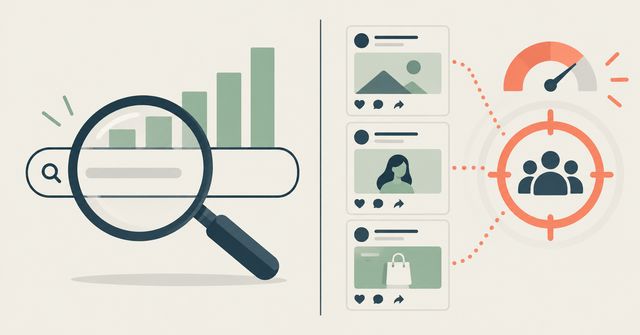
If someone already knows they have a problem and is actively typing a solution into a search bar, an ad that shows up right when they search is capturing demand. Search advertising is built for this. Someone searches for what they need, your ad appears alongside the results, and you pay when they click through to a page that matches that search.
If nobody is searching for what you offer, because they don't know it exists yet, or because it solves a problem they haven't put into words, search ads have nothing to capture. That's when advertising has to interrupt someone's scroll and introduce them to something they weren't looking for. Social and display ads do this job. You're not answering a search; you're creating interest from scratch based on who someone is and what they've shown interest in before.
Neither job is better, but running the wrong one for your situation is part of why so many small business owners try ads once, see nothing happen, and conclude paid advertising doesn't work for businesses like theirs.
Check for Existing Demand First
Before spending a dollar, find out whether people are already searching for what you sell. Google's Keyword Planner is Google's official keyword research tool, and it's free to use with a Google Ads account before you launch a campaign. Enter the terms a customer would use to describe what they need, and it will show you whether people are searching for it.
The catch: without active ad spend, you won't get an exact number. Users who aren't running campaigns will see volume ranges like "1K-10K," while those running campaigns with sufficient ad spend see more accurate search volumes. The ranges are still useful. A range of "1,000 to 10,000" searches a month still tells you demand exists. A search term that returns almost nothing, or that Google can't even match to a real query, tells you something just as important: nobody is looking for this yet, at least not in words you'd recognize.
Run several versions of how a customer might phrase the need, not just the term you'd use internally. A customer doesn't search using your industry's jargon. They search the way they'd describe a problem to a friend. If none of those phrasings return meaningful volume, that's a real signal, not a fluke.
If the Demand Isn't There Yet, Check the Audience Instead
Low existing search volume doesn't mean paid ads are off the table. It means search ads specifically aren't the right entry point because there's no existing behavior to capture. This is common for a new product, a niche service most people don't know is available, or anything that solves a problem people haven't yet learned to search for by name.
In that case, the question changes from "are people searching for this" to "can I identify who these people are, even if they aren't searching yet." Platforms built for demand creation, like Meta's advertising tools, let you check this before committing budget. When you build a targeting set, the ad platform shows you an estimated audience size for that group. Ads Manager's audience definition shows an estimated audience size: the number of people eligible to see your ads, represented visually with a meter ranging from too broad, to ideal, to too specific.
If you can describe your ideal customer by demographics and interests, and the platform shows a real, identifiable group of meaningful size, there's an audience to test against, even without existing search demand. If you can't narrow the targeting to anything coherent, that's a warning sign worth taking seriously before you spend real money learning it the hard way.
A Grounding Example
Picture a woodworker who builds custom furniture with an unusual, patented joinery method nobody else offers. Almost no one searches "hidden-joint modular shelving," because almost no one knows it exists. Search ads would sit there with no volume to capture. But the audience for it—people who follow custom furniture makers, woodworking content, and design accounts—is identifiable and reachable. A well-made photo or video ad introducing the idea to that audience has a defined group to reach. Search ads would have failed here for a reason unrelated to ad quality and tied entirely to testing the wrong kind of demand.
What It Means If Neither Signal Is There
If a keyword search turns up close to nothing and you also can't describe a coherent, identifiable audience for the idea, that is the clearest pre-spend signal available: paid ads may not be the right first move for this specific offer, right now. That doesn't mean the business is doomed. It often means the market doesn't yet understand the problem being solved, and building initial demand through content, referrals, or word of mouth may need to come before an ad budget will produce returns worth measuring.
For everything else, this check is a cheap, fast way to know which kind of campaign to build, before deciding how much to spend or which platform to commit to.
Key Takeaways
- Whether paid ads will work depends on whether people are already searching for what you sell, not on your industry or budget size.
- Search ads capture demand that already exists; social and display ads create demand from scratch, and each requires a different pre-spend check.
- Google's Keyword Planner is free to use without running a campaign and shows whether real search volume exists for the terms customers would use.
- Ad platforms built for demand creation show an estimated audience size before launch, which reveals whether an identifiable group exists even without search demand.
- If neither search volume nor an identifiable audience exists for an offer, building initial awareness may need to happen before an ad budget will pay off.
Figuring out which kind of demand you're working with before building the campaign is what separates an ad budget that produces customers from one that just produces clicks. Mindstate Strategy's paid ads service starts with this kind of check, and you can get in touch to talk through what your business is working with before committing a budget.