If most of the people who click your paid ads still leave without buying, that doesn't mean the campaign is broken. It's normal. Across most industries, only a small share of first-time visitors convert on that first visit.
Suplex reports average ecommerce coversion rates to generally fall between 1.8% and 3%, though specific rates will vary by specific industry and other factors.
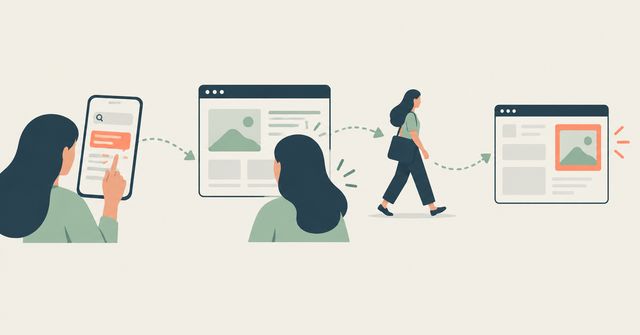
Many business owners respond by spending more to buy another round of first-time clicks. But there's a cheaper, higher-converting option in the audience you already paid to reach: the people who clicked once, looked around, and left. Advertising specifically to them, instead of only to strangers, is called retargeting (sometimes remarketing), and it works by showing ads to people who've already visited your site, using a small tracking snippet installed on your pages.
Why the first click rarely closes the sale
Someone clicking your ad for the first time is, by definition, a stranger to your business. They don't know if you're reliable, whether your price is fair, or whether you're the right fit compared to whatever else they're considering. Most people who land on a site from an ad leave to think it over, compare options, or simply get distracted, and never come back on their own.
Retargeting is built for that gap. Instead of depending on one visit to do all the selling, it keeps your business in front of people who already showed interest by visiting, through ads that follow them to other sites and apps they use afterward.
What changes when you retarget instead of only chasing new clicks
Reported performance often shows a wide gap between ads shown to cold audiences and ads shown to people who already visited your site. The benchmark most often cited for retargeting claims average click-through rate for standard display ads is 0.07%, while retargeted ads click at about 0.7%, a roughly tenfold gap. A retargeted impression is shown to someone who already visited your site, so the audience is warmer than any cold display buy.
Retargeted website visitors are reported to be 70% more likely to convert on the retailer's website than those who are not.
For a small operating budget, retargeting campaigns are generally reported to cost less per click and per resulting customer than campaigns aimed at cold audiences, because the platform is reminding someone who already showed intent instead of trying to convince a total stranger, which compounds. Fewer wasted impressions, lower cost per result, and a shorter path from click to sale.
Where the ad money goes without it
Picture a visitor who clicks a search ad, browses a few pages, gets pulled away by a phone call, and never returns. Without retargeting, that click is gone. The next dollar spent goes toward finding a brand-new stranger and starting the entire trust-building process over from zero. With retargeting turned on, that same visitor sees a follow-up ad on a different site a day or two later, one that might reference the specific page they looked at, and gets a second (or third) chance to come back and finish what they started.
Owners often assume the fix for a low conversion rate is a better headline, a lower bid, or a new audience to target. Sometimes it is. But often, the highest-value audience is not a new one at all. It's the list of people who already visited and left, and most campaigns never talk to them again.
What it takes to set up
Retargeting requires a small piece of tracking code (a pixel) placed on your website, which lets the ad platform recognize when someone who visited comes back online elsewhere. That tracking also feeds the reporting that shows which pages people visited before they left, which is useful information even if you never run a retargeting campaign. Getting that tracking set up correctly, and getting clean reporting out of it, is work many small ad accounts skip entirely, which means the option to retarget isn't even available to them yet.
Once tracking is live, the campaign itself is usually simpler to manage than a cold-audience campaign. The audience is already defined: whoever visited your site. The budget required to reach them is smaller because the list itself is smaller and more targeted than the general public.
Where this fits into a broader ad budget
Retargeting isn't a replacement for reaching new people. It's a second layer that catches the ones your first layer of ads already paid to bring in but didn't convert. A budget that only ever chases new clicks is leaving a warmer, cheaper audience completely untouched. A budget that includes even a modest retargeting slice gets more out of the visitors you already paid for.
For a small business trying to make every ad dollar count, that's not a minor optimization. It's often the difference between a campaign that breaks even and one that turns a real profit, because the second exposure to an already-interested visitor tends to cost less and close more often than the first cold click ever did.
Key Takeaways
- Most first-time visitors to a website leave without buying across most industries, so a low first-click conversion rate isn't necessarily a sign the ad itself is failing.
- Retargeting ads are shown specifically to people who already visited your site, and the cited industry data points to higher click-through and conversion rates for this group compared to cold audiences.
- Retargeting requires a tracking pixel on your website; setting this up correctly also improves the underlying reporting on where visitors go and where they leave.
- A retargeting budget works alongside, not instead of, campaigns aimed at new visitors, catching people you already paid to reach once before writing them off.
If your ad budget is only ever chasing new clicks, Mindstate Strategy's paid ads team can help build in the tracking and retargeting layer that reaches the visitors who already showed interest. Contact us to look at what your current campaigns are missing.